How Fast Heatstroke Develops in Humid Climates
When summer settles into North Carolina, it’s not just the temperature you need to watch. High humidity can make it much harder for dogs to cool themselves. A warm afternoon can turn into a dangerous situation faster than many pet owners realize. At Animal Medical Hospital & Urgent Care in Charlotte, we regularly help pets experiencing heat-related emergencies during the hottest months of the year, and early action can make all the difference.
Many people assume heatstroke only happens after prolonged outdoor activity, but cases of dog heatstroke in humidity can come on with surprising speed. Even a short walk, time spent in the backyard, or a few minutes in a hot car can quickly become dangerous when humidity levels are high.
Why Humidity Makes Heat More Dangerous
Dogs primarily cool themselves through panting. In dry conditions, that process works more efficiently because moisture evaporates from the tongue and respiratory tract. In humid weather, evaporation slows down dramatically, which makes it harder for your dog’s body to release heat.
This combination of humidity and heat causing illness in dogs is especially concerning throughout the Southeast, where summer conditions can feel heavy and oppressive for both people and pets. The southeast heat risk to pets increases even more for:
- Flat-faced breeds like bulldogs and pugs
- Senior dogs
- Puppies
- Overweight pets
- Dogs with heart or respiratory conditions
- Thick-coated breeds
Once a dog’s internal temperature rises too high, organ damage can begin surprisingly quickly.
How Quickly Can Heatstroke Develop?
One of the biggest misconceptions about heatstroke is that it takes hours to happen. In reality, rapid overheating in dogs may occur within minutes under the wrong conditions.
For example, a dog running at the park during a humid afternoon may initially seem fine. However, their body temperature can climb rapidly if they can’t cool down efficiently. By the time visible symptoms appear, the situation may already be serious.
Even shaded areas may not provide enough relief when the humidity is extreme. Dogs still trap heat internally, especially if airflow is limited.
Warning Signs You Should Never Ignore
Heatstroke symptoms can escalate quickly, so it’s important to recognize early changes in your dog’s behavior and physical condition.
Keep an eye out for signs such as:
- Excessive panting
- Thick or sticky drool
- Bright red gums or tongue
- Weakness or stumbling
- Vomiting or diarrhea
- Glassy eyes
- Collapse or loss of consciousness
Some dogs may also seem unusually anxious, restless, or unable to settle down.
If you notice these symptoms, move your dog to a cool area immediately and contact a veterinarian right away. Emergency heatstroke and timing of care are closely connected because delaying treatment even briefly may increase the risk of serious complications.
What To Do If You Suspect Heatstroke
If you believe your dog may be overheating, start cooling measures while preparing to seek veterinary care. Our team recommends:
- Moving your dog indoors or into shade
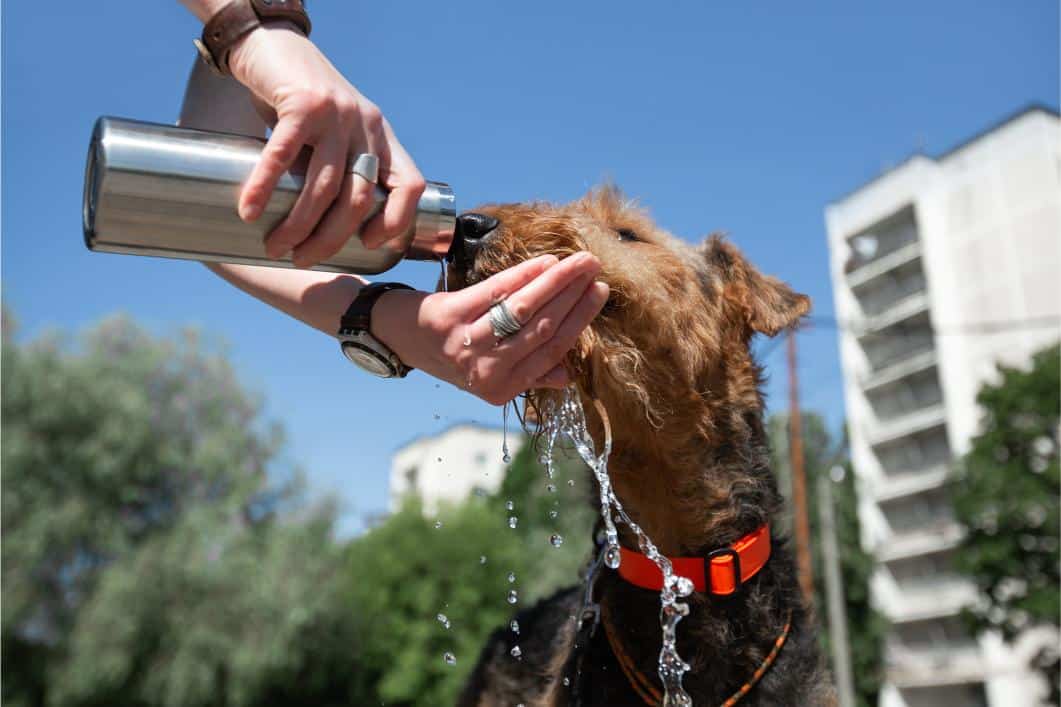
- Offering small amounts of cool water
- Using cool, damp towels on the paws, belly, and neck
- Turning on fans or air conditioning
- Avoiding ice baths or extremely cold water
It’s important not to overcorrect too quickly, as sudden temperature changes can create additional stress on the body.
Even if your dog seems to improve after cooling down, veterinary evaluation is still essential. Heatstroke can continue causing internal damage after outward symptoms begin to fade.
Learn more about how to decide if your pet needs urgent care in this blog post.
Protecting Your Dog During Humid Charlotte Summers
Prevention is always safer than treatment. During periods of high heat and humidity:
- Walk your dog early in the morning or later in the evening
- Limit strenuous activity outdoors
- Always provide access to shade and fresh water
- Avoid hot pavement
- Never leave your dog in a parked car
Pay close attention to humidity forecasts, not just temperature readings. Sometimes, a moderately warm day with heavy humidity can be more dangerous than a hotter but drier one.
If your pet shows signs of overheating or you’re concerned about heat-related illness, the veterinarians and team at Animal Medical Hospital & Urgent Care are here to help. Call us at (704) 334-4684 to book an appointment or seek urgent care for your pet this summer.